
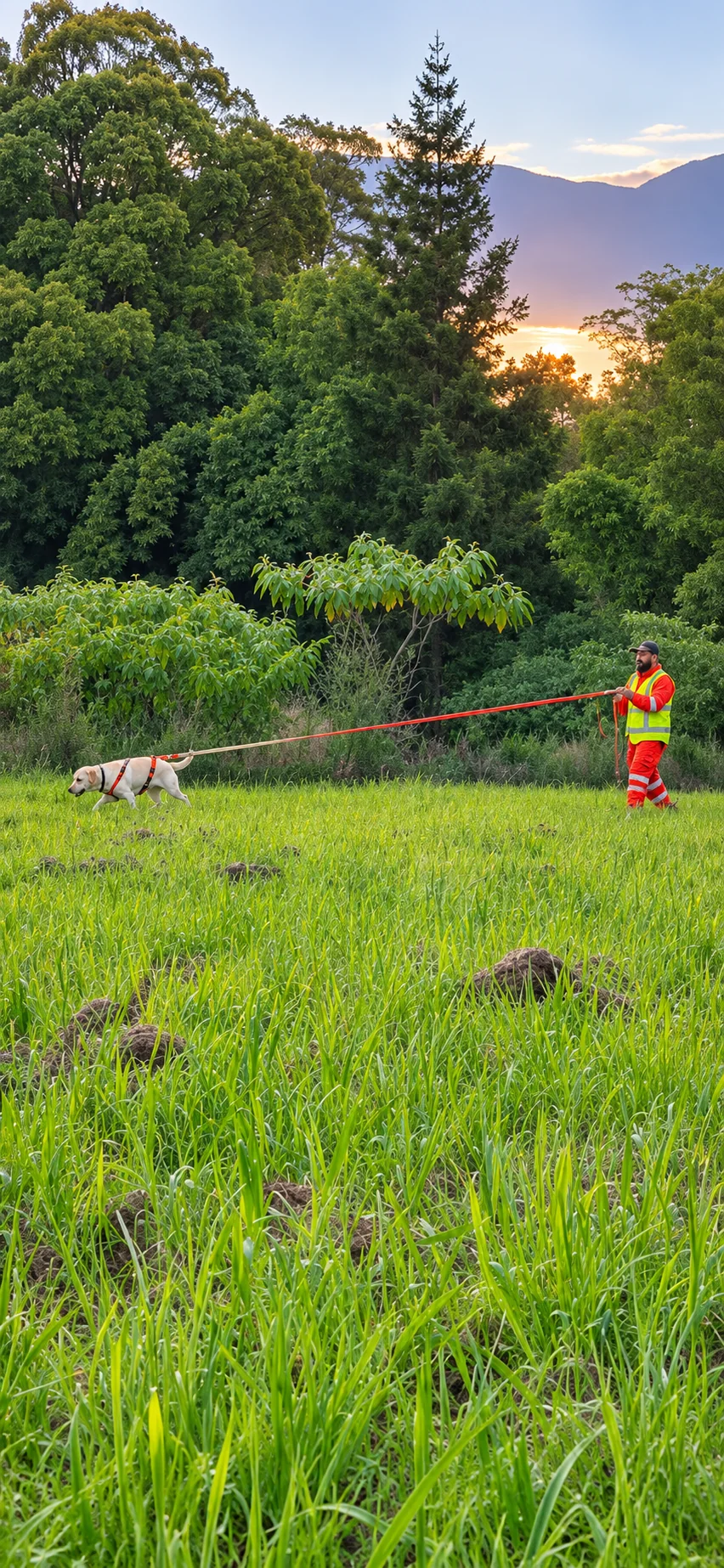
Imagine walking into a field with your dog, showing them an item that carries somebody’s scent and asking them to find that person. You might have no idea where the person has gone. Your dog, however, has a remarkable way of investigating the world that we can barely begin to imagine.
That is the idea behind mantrailing. It is a fascinating scent-based activity that gives dogs a job they are naturally equipped to enjoy and gives owners a completely different way to work together.
What is mantrailing?
Mantrailing is the practice of teaching a dog to follow the scent trail of a particular person. Usually, the dog starts with a scent article such as an item of clothing worn or handled by that person. With their nose leading the way, they work through the environment to locate the person at the end of the trail.
The dog normally wears a comfortable tracking harness and works on a long line, while the handler follows and learns to read what the dog is communicating. The person being found, often called the trail layer or runner, makes the discovery worthwhile with a reward the dog genuinely enjoys.
It is not about making the dog walk neatly beside you or follow a series of obedience commands. The dog takes the lead. Our role is to teach the game, build motivation and give the dog the confidence to solve the problem.
Where did mantrailing come from?
Dogs have been using their noses to follow scent for thousands of years. Long before organised dog sports existed, people relied on scent hounds to follow game, track movement and find what human eyes could not see. Bloodhounds became especially well known for their ability to follow human scent.
As the value of this ability became better understood, dogs were used in organised tracking and searches. Historical records from police forces describe bloodhounds assisting with searches for people during the nineteenth and early twentieth centuries. Similar scent-following skills later became an important part of some police and search-and-rescue work.
Modern recreational mantrailing grew from the same basic idea: let a dog identify and follow a person’s scent, but teach it in a structured, rewarding way that ordinary dog owners can enjoy. Clubs and instructors have helped make it a popular activity across different countries, with trails adapted to each dog’s experience and ability.
There is an important distinction here. Mantrailing as a sport is not the same as an operational search-and-rescue qualification. Both involve scent work, but real missing-person searches demand much more training, testing, safety preparation and teamwork. For most owners, the sport is about enrichment, partnership and discovering what their dog can do.
How do dogs find people? The power of a dog’s nose
We experience the world mainly through our eyes. Dogs experience an enormous amount of it through scent.
A dog’s nose has many more scent-detecting receptors than a human nose, although the number varies between breeds and individual dogs. Dogs also have specialised brain systems for processing odours. That combination allows them to notice scent information we would completely miss.
As people move through an area, they leave behind a changing mixture of scent from their skin, clothing and other sources. Air movement, moisture, temperature, surfaces and time all affect how those odours spread and remain in the environment. To a dog, the trail is not necessarily a neat, invisible line along the exact footsteps someone took.
A trailing dog may cast from side to side, stop, lift its head to sample the air, move around an obstacle or change direction as it sorts out the scent. What looks to us like wandering can be the dog working through a complicated scent picture.
That is one of the most exciting things about mantrailing. We cannot smell the trail ourselves. We have to learn to trust the dog, observe the little changes in its behaviour and become a better partner.
Mantrailing as a sport: a brilliant job for your dog
Many dogs love using their noses, but everyday life does not always give them much opportunity to do it with purpose. Mantrailing turns that natural interest into a game with a clear goal: find the person and earn a great reward.
Early exercises are simple and motivating. The dog may see the person move away and disappear only a short distance into cover. As the dog starts to understand the game, the trail can become longer and more interesting, with turns, changes in surface, different environments and increasing distractions.
For the handler, the challenge is just as rewarding. You learn to manage the line, avoid interfering with the dog’s decisions and recognise when your dog is following scent, checking an area or solving a problem.
Done thoughtfully, mantrailing can provide mental stimulation, physical activity and a sense of achievement for dogs and owners alike. It can also give some dogs an enjoyable outlet away from the pressure of busy obedience environments, with each team working at a suitable pace.
Can my dog do mantrailing?
Yes. Mantrailing is not reserved for Bloodhounds, working dogs or specially bred search dogs. Labradors, Kelpies, Spaniels, Terriers, mixed breeds and many other dogs can learn the game.
A dog does not have to arrive knowing how to search for a person. We start by finding out what motivates that individual dog, perhaps a favourite food reward, a toy or an enthusiastic game with the person at the end of the trail. Then we build the dog’s understanding, step by step, so that searching becomes something they actively want to do.
Young dogs, older dogs and less confident dogs may all be able to take part, provided the exercise is suitable for their health, comfort and abilities. The length, terrain, temperature and complexity of each trail can be adjusted. A good session should leave the dog wanting to play again.
What matters most is not the breed. It is giving the dog a clear, enjoyable reason to hunt for the person and helping the owner learn how to work alongside them.
Interested in mantrailing around Coffs Harbour?
At Canine Revolution Dog Training, based in Karangi near Coffs Harbour, we’re exploring interest in future mantrailing opportunities for dog owners on the NSW Mid North Coast.
If you have ever watched your dog follow a smell across the grass and wondered what that nose could really do, we would love to hear from you. You do not need previous scent-work experience, and you do not need a particular breed to express interest.
Contact Canine Revolution and include “Mantrailing enquiry” in your message. We can then keep your interest in mind as future opportunities develop. Mantrailing classes are not yet advertised as available for booking.
Your dog’s nose could open up a whole new way for the two of you to have fun together.

